
Power outages and off-grid trips both raise the same question: where does electricity come from when the wall outlet is not an option? Portable power stations and solar generators have become the common answer, offering stored energy that can run anything from a laptop to a refrigerator. Understanding how these systems are built and sized helps in sorting through the growing range of options on the market, including the lineup from jackery.com.
Battery Packs, Inverters, and Solar Add-Ons Explained
A portable power station is, at its core, a battery pack with an inverter and a set of outlets, built to store electricity and release it on demand through AC plugs, USB ports, or car-style sockets. A solar generator is typically the same battery unit paired with solar panels, so that sunlight can refill the battery instead of relying solely on a wall outlet. jackery.com sells both configurations, with many of its battery units offered either as a standalone power station or bundled with solar panels under the “solar generator” naming.
The distinction matters less than it sounds, since the battery hardware is frequently identical between a standalone unit and its solar-bundled counterpart. What changes is whether panels are included from the start. This overlap is visible across jackery.com‘s catalog, where product lines such as Explorer and HomePower appear both as power stations sold alone and as solar generator bundles.
How Jackery’s Explorer and HomePower Lines Differ
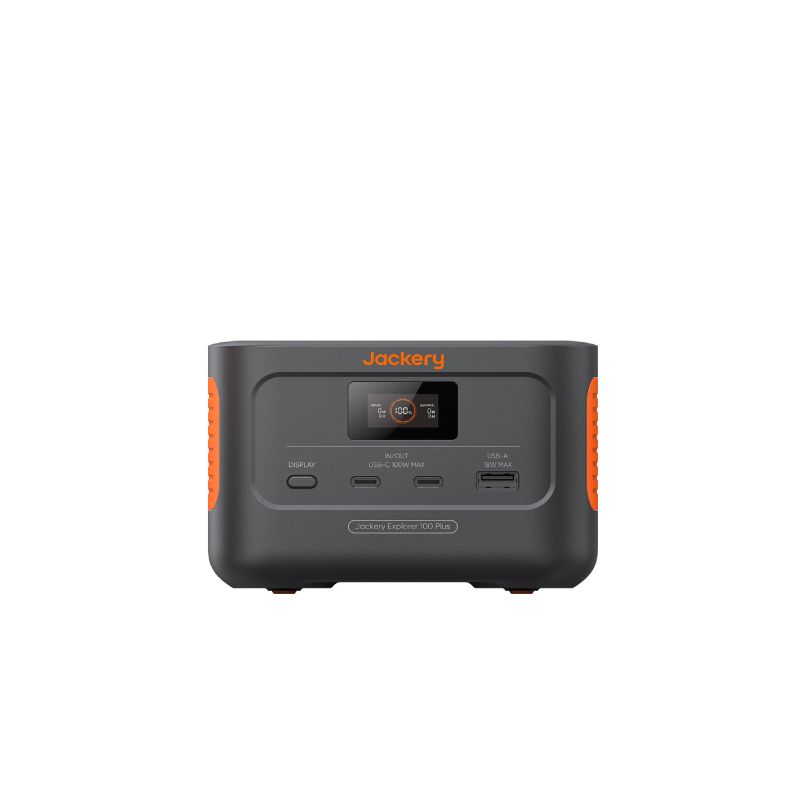
jackery.com organizes its range into two main product families. The Explorer line includes models such as the Explorer 300, Explorer 1000 v2, Explorer 1500 v2, Explorer 2000 v2, and the Explorer 2000 Plus, spanning smaller portable units up to higher-capacity systems. The HomePower line, which includes the HomePower 1000 v2, HomePower 2000 Plus v2, HomePower 3000, and HomePower 3600 Plus, is positioned around home backup use, with some models also offered in a Red Cross Edition.
Several HomePower models are described as expandable home backup generators, with output figures and capacities listed separately from the Explorer units. The HomePower 3600 Pro Max, for instance, is described as usable with a manual transfer switch to help route backup power through a household electrical panel, distinguishing it from smaller, fully portable units meant to be carried and plugged in directly.
Understanding Battery Capacity and Power Output
Capacity, measured in watt-hours (Wh), indicates how much energy a unit can store, while output, measured in watts (W), indicates how much power it can deliver at once to connected devices. These two figures are usually listed together on any product page, and both matter for different reasons. A unit with large capacity but modest output can run small devices for a long stretch, while one with high output can handle demanding appliances for a shorter period.
Across jackery.com‘s catalog, capacity ranges from the Explorer 300 v2 at 288Wh with a 300W output up to the Solar Generator 5000 Plus at 5040Wh with a 7200W rated output supporting both 120V and 240V. In between sit models such as the Explorer 1000 Plus at 1264Wh with 2000W output, the Solar Generator 2000 v2 at 2042Wh, and the HomePower 3000 at 3072Wh with 3600W output. These numbers illustrate how the same general category of product can be sized very differently depending on the intended load.
Scaling Up: Expandable Systems and Multi-Day Backup
Some systems are designed to grow beyond their base capacity through add-on battery packs. The HomePower 2000 Plus v2 ships with a 4096Wh capacity that can be expanded up to 12kWh, while the HomePower 3600 Plus starts at 7168Wh and can be expanded further, according to jackery.com‘s product listings. The Solar Generator 5000 Plus goes further still, with a base 5040Wh capacity expandable up to 60kWh, which the brand describes as enough for extended multi-day backup.
This expandability is what separates a simple portable battery from a system built around sustained home backup. The HomePower 3000, for example, is described as keeping essentials such as a fridge, Wi-Fi, and lights running for one to two days on its base 3072Wh capacity, without needing an add-on battery. Expansion packs let that runway extend considerably further when outages last longer than a day or two.
Solar Charging and Off-Grid Independence
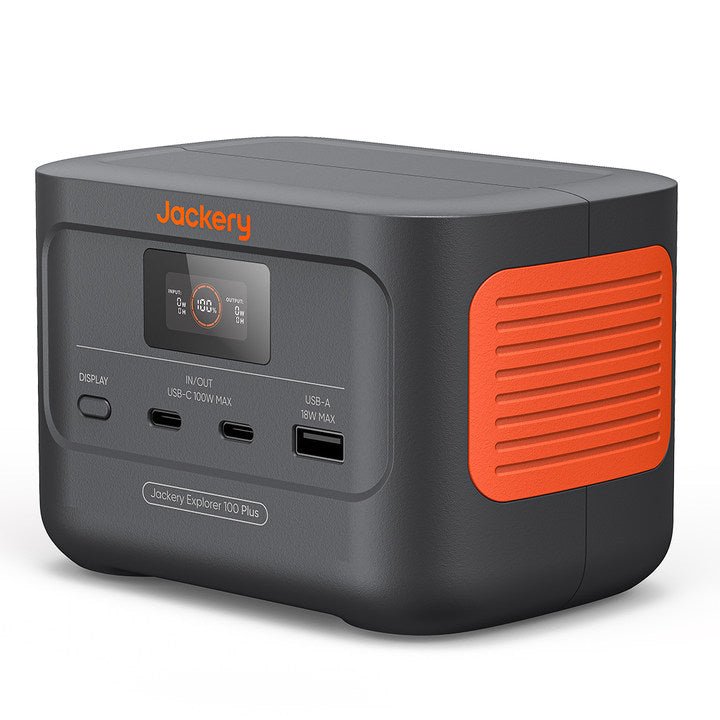
Recharging through solar panels rather than a wall outlet is what gives a solar generator its off-grid appeal, since it removes the dependency on grid power entirely. jackery.com lists panels such as the SolarSaga 500 X, a bifacial, IP68 waterproof panel, alongside smaller 100W Air panels bundled with units like the Solar Generator 1000 Plus, which notes that power can be scaled up to 5kWh by adding panels and batteries together.
Charging speed also varies by model and input method. The Explorer 1000 v2 and Solar Generator 1000 v2 are both listed with an emergency charge option bringing the battery from 0 to 100% in roughly 1 hour using wall power, while the Explorer 2000 v2 lists a comparable emergency charge of about 1.3 hours. These figures apply to AC wall charging rather than solar input, which typically takes longer and depends on panel wattage and sunlight conditions.
Choosing Between Portable and Home Backup Solutions
Deciding between a portable unit and a home-backup-oriented system often comes down to how the power will be used day to day. A smaller, lighter unit such as the Explorer 300 v2, with its 288Wh capacity and 300W output, suits short outings or charging small devices, while larger HomePower units are built around running a household’s essential circuits through longer outages. jackery.com‘s catalog spans both ends of that range, along with a Red Cross Edition offered on select HomePower models.
- Capacity, measured in Wh, determines how much total energy a unit can store before needing to be recharged.
- Output power, measured in W, determines how many and how demanding the devices are that can be run at once, including whether an appliance’s startup surge can be handled.
- Charging speed varies by method, with AC wall charging generally faster than solar input and some models listing a specific emergency charge time.
- Expandability refers to whether additional battery packs can be added later to increase total stored capacity beyond the base unit.
- Intended use case, whether portable outdoor use or stationary home backup, often dictates the weight, output level, and panel compatibility of a given model.
Weighing these features side by side, rather than focusing on a single spec, gives a clearer picture of which portable power station or solar generator fits a particular situation, whether that is a weekend trip or a multi-day grid outage.
Portable power stations and solar generators continue to converge in capability, with capacity, output, and expandability now the clearest way to tell one model from another.
