
Winter brings a particular kind of power anxiety. Storms knock down lines, demand spikes strain the grid, and a freezer full of food can spoil within hours of an outage. bluettipower.co.uk positions its portable power stations and expandable battery systems as a direct response to that seasonal pressure, covering everything from a single fridge to a full off-grid setup.
Why Winter Demands Dedicated Backup Power
Cold-weather outages tend to differ from summer ones. Storms, ice, and heavy grid demand can cause longer and more frequent interruptions, and the stakes are higher when refrigerated medicine, a sump pump, or heating controls are involved. A backup power system built for this season needs to switch on fast, hold enough capacity to matter, and keep running even when an outage stretches past a single evening.
bluettipower.co.uk frames its autumn and winter backup lineup around that exact scenario, with messaging built around keeping essentials powered the moment the grid drops. The emphasis across the range is on automatic protection rather than manual intervention, since nobody wants to be flipping switches in the dark during a cold snap.
BLUETTI FridgePower: Automatic Protection for Essential Appliances

The BLUETTI FridgePower is built specifically around the fridge-protection problem. It carries a 2,016Wh capacity and 1,800W output in a LiFePO₄ battery format, and its defining feature is a 75mm ultra-slim profile that slides in beside a fridge, under a cabinet, or behind a car seat, with wall mounting also available to keep floor space clear. Its UPS function switches over automatically in under 10ms, so a fridge or freezer never has to restart from zero.
Expandability is built into the design. FridgePower can scale up to 8,064Wh, which is stated to run essentials such as Wi-Fi, a TV, and lighting for up to 3 days based on typical essential-load usage, though actual runtime varies with the devices connected. For campervans, vans, or SUVs, the slim unit can pair with a Charger 2 for faster recharging, or connect to a DC Hub to run 12V/24V car fridges and other DC equipment directly.
Expandable Systems: EP760 and B500 for Growing Winter Needs

Beyond single-unit backup, the catalogue on bluettipower.co.uk includes modular home battery systems designed to grow alongside household demand. The EP760 home battery backup, for example, pairs with B500 battery modules to deliver up to 7,600W single-phase output and a modular capacity range from 9,920Wh to 19,840Wh. That scalability matters in winter specifically, since heating loads, extra lighting, and backup appliances can push total demand well past what a single compact unit can supply.
The EP760 system also carries a 10-year warranty and uses a LiFePO₄ battery, and it is described as compatible with existing or new solar setups. Because the capacity is modular rather than fixed, a household can start with one battery block and add more as winter energy needs change, rather than replacing the whole system outright.
Portable Power Stations for Seasonal Emergencies: EB55 and EB70
For households or travellers who need backup power that can move, the Elite series offered through bluettipower.co.uk provides a middle ground between a small CPAP-focused unit and a full home battery wall. The Elite 400 Portable Power Station carries a 3,840Wh capacity with 2,600W rated output (3,900W lifting power), and is built with wheels and handles for mobility. It can charge up to seven devices at once and reaches 0 to 80% in about an hour when combined AC and solar input run at 3,300W.
Its 15ms UPS switching is pitched at home backup use, keeping devices running without a flicker during an outage, and it supports flexible recharging from solar panels, wall outlets, or a car. For smaller, more targeted needs such as medical equipment, the range also includes the X30, a 297Wh CPAP battery backup weighing 1.8kg with 11 output ports and pass-through charging, which is compact enough to travel but is not designed for whole-appliance backup the way the Elite or FridgePower units are.
Solar Integration and Multi-Charging Options for Year-Round Resilience
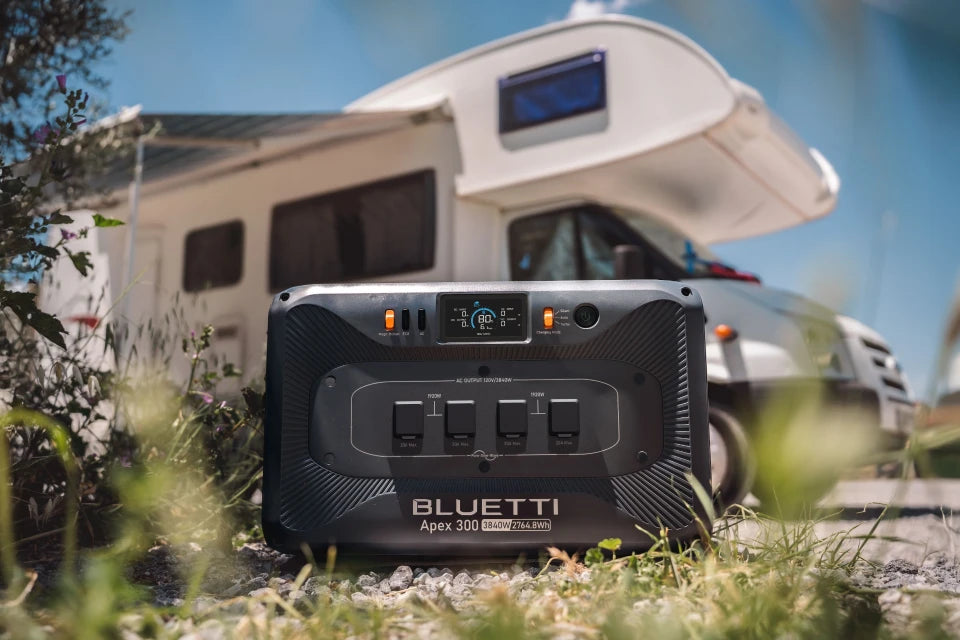
Winter backup power is rarely just about the battery itself; charging flexibility matters just as much once an outage runs long. Units listed on bluettipower.co.uk generally support multiple charging paths, including solar panels, standard wall outlets, and car charging, so that a depleted unit is not dependent on a single recharging method. The Elite 400, for instance, is built to combine AC and solar input simultaneously to speed up recovery time between outages.
FridgePower follows the same logic with its DC Hub option, which allows 12V/24V equipment to draw power directly without converting through AC first, and its Charger 2 accessory, which is described as recharging up to 13 times faster than a standard 12V car outlet. For a household or off-grid setup facing repeated winter outages, having more than one way to refill a battery reduces the chance of being stuck with a drained unit and no sunlight or grid power available.
Choosing between these options comes down to matching capacity and charging flexibility to the specific situation a household or traveller expects to face. The list below outlines the practical points worth weighing before settling on a winter backup configuration.
- Capacity needs to match the actual appliances being protected, since a fridge alone draws far less than a fridge, lighting, and a router combined.
- Automatic switchover speed determines whether sensitive electronics restart cleanly or experience a brief interruption during a power cut.
- Expandability allows a system to grow from a single battery module to a larger modular capacity as seasonal demand increases.
- Charging methods, including solar, wall outlets, and car charging, determine how quickly a drained unit can be brought back to full capacity.
- Suitability for different scenarios varies widely, since a slim unit built for a single fridge serves a different purpose than a modular home battery wall built for a whole household.
Backup power planning for winter is less about finding one universal unit and more about matching scale to the actual risk at hand.